
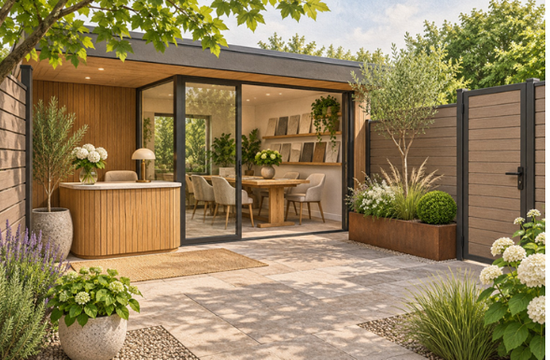
A garden consultation room can make working from home feel more settled. Clients have somewhere specific to meet you, materials can remain ready and the household doesn’t have to share its main living area with every appointment. The arrangement becomes much easier when the garden approach and the room are planned together.
Good garden consultation room ideas focus on how the visit feels from both sides. A client needs to find the entrance and feel comfortable once inside. You need privacy, organised supplies and enough time to prepare between meetings. Begin with those routines, then use decoration to give the room its character.
Plan the conversation before choosing a desk
Describe what usually happens during an appointment. Do you look at samples together, discuss drawings or work through information on a screen? A large desk may suit one service while creating an awkward distance for another.
Set up a temporary arrangement and try a practice conversation. Put the documents or materials on the table and notice whether both people can see them comfortably. Include the moment of sitting down, placing a bag and reaching for something you use repeatedly.
Confirm any permissions, professional obligations and insurance arrangements relevant to the particular business. A layout borrowed from another service may look convincing while missing something essential to your own work. The room should support the actual appointment rather than a general image of what a professional office ought to look like.
Look closely at privacy
Sit in the proposed client seat and look towards the house and garden route. Then walk outside and look back. A room may feel secluded from one position while exposing a working surface through another window.
Check evening use and seasonal changes. An interior becomes more visible when it’s lit after dark, and a leafy boundary can feel different in winter. Start with the particular views that need attention. Moving furniture or adjusting the route may solve an issue before additional screening is necessary.
Sensitive conversations also raise a separate sound question. A visual screen doesn’t establish acoustic privacy. If the service needs particular sound control, seek advice suited to the building and the work. Make that assessment before assuming decorative furnishings can provide performance the room hasn’t been designed to deliver.
Make the garden boundary feel intentional
A private consultation room can still belong in an enjoyable garden. Use screening around relevant sightlines and keep enough room for the approach, planting and building maintenance. Enclosing every edge may make a small plot feel unnecessarily restricted.
NeoTimber’s composite fencing is one range to review when a more defined boundary is appropriate. Compare finishes beside the room exterior and consider posts, panels and the gate as one arrangement. Confirm ownership, relevant restrictions and site conditions before specifying the work.
Leave access for caring for the boundary and the plants beside it. A narrow strip packed with greenery can become difficult to reach as it matures. Choose a scheme that softens the view while remaining manageable during the working weeks when the business has most of your attention.
Tell visitors exactly how to arrive
Short, accurate directions can remove much of the uncertainty around a home appointment. Explain which gate to use and what happens on arrival. Test the instructions with someone who hasn’t visited before; the route you know instinctively may not be obvious to them.
Keep the physical approach consistent with the message. A gate described as the client entrance should be available at appointment times. A bell should be recognisable, and a waiting point should not leave someone wondering whether to knock at a private door.
Plan deliveries separately where practical. Couriers may arrive during consultations, so give them an appropriate route or instruction that reduces unnecessary interruptions. Don’t place storage or decorative pots where they repeatedly have to be moved to let a delivery through.
Be clear about early arrivals
Small garden rooms don’t always have space for an indoor waiting area. Decide what is appropriate for the service and communicate it in advance. Some visitors may wait in a suitable sheltered place; another business may ask clients to arrive close to the agreed time and signal when the room is ready.
If you provide waiting seating, think about weather, privacy and comfort. A chair that looks attractive in the garden isn’t automatically suitable for the people attending. Keep it away from the main route and avoid giving someone an unintended view into a private part of the home.
Use the same practical approach inside. Give bags and coats a clear home so they don’t take over the consultation surface. A small room feels more comfortable when ordinary belongings have somewhere to go without interrupting the conversation.
Keep information relevant to the appointment
Too many notices can make a modest room feel busy. Decide which details need to be visible and which can be sent beforehand or provided afterwards. Keep essential information easy to identify instead of placing every service and policy on the wall.
If changing content or project examples justify a dedicated display, Teksmart’s digital signage offers options to investigate. Match the hardware to the viewing position and intended setting, then establish who will keep the content current.
Use images you have permission to show and keep customer information away from a public-facing screen. The display should help explain something useful during the visit. It shouldn’t compete with a conversation that needs attention or become another system you struggle to maintain between clients.
About NeoTimber
NeoTimber supplies fencing and other outdoor ranges, with samples and planning resources available through its website. Its fencing installation information can help inform a discussion about the complete boundary being proposed around a garden workroom.
For a consultation space, use those resources to compare the finish with the building and assess the layout with the installer. Consider the gate and access route alongside the panels. That connects the appearance of the boundary with its everyday purpose, giving clients a clear approach while keeping the surrounding home comfortable to use.
Make the reset between clients straightforward
Organise supplies according to how you use them. Keep appointment materials within reach and give administration or cleaning items separate storage. Follow the relevant requirements for confidential records rather than assuming a private garden building removes the need for secure handling.
Consider light and temperature through the day. A window that looks inviting can create glare at the meeting table. Review shading, ventilation and heating appropriately, and put controls where they are convenient to use.
Before opening, run through a whole visit from the street to the final goodbye. Ask for feedback about finding the room, comfort and anything that felt uncertain. Then make the small adjustments the trial reveals. A successful consultation room gives you and the client a calm place to work together while allowing the rest of the property to remain a home.Read more at https://tipsdrhomey.org/.
 Tips DrHomey