
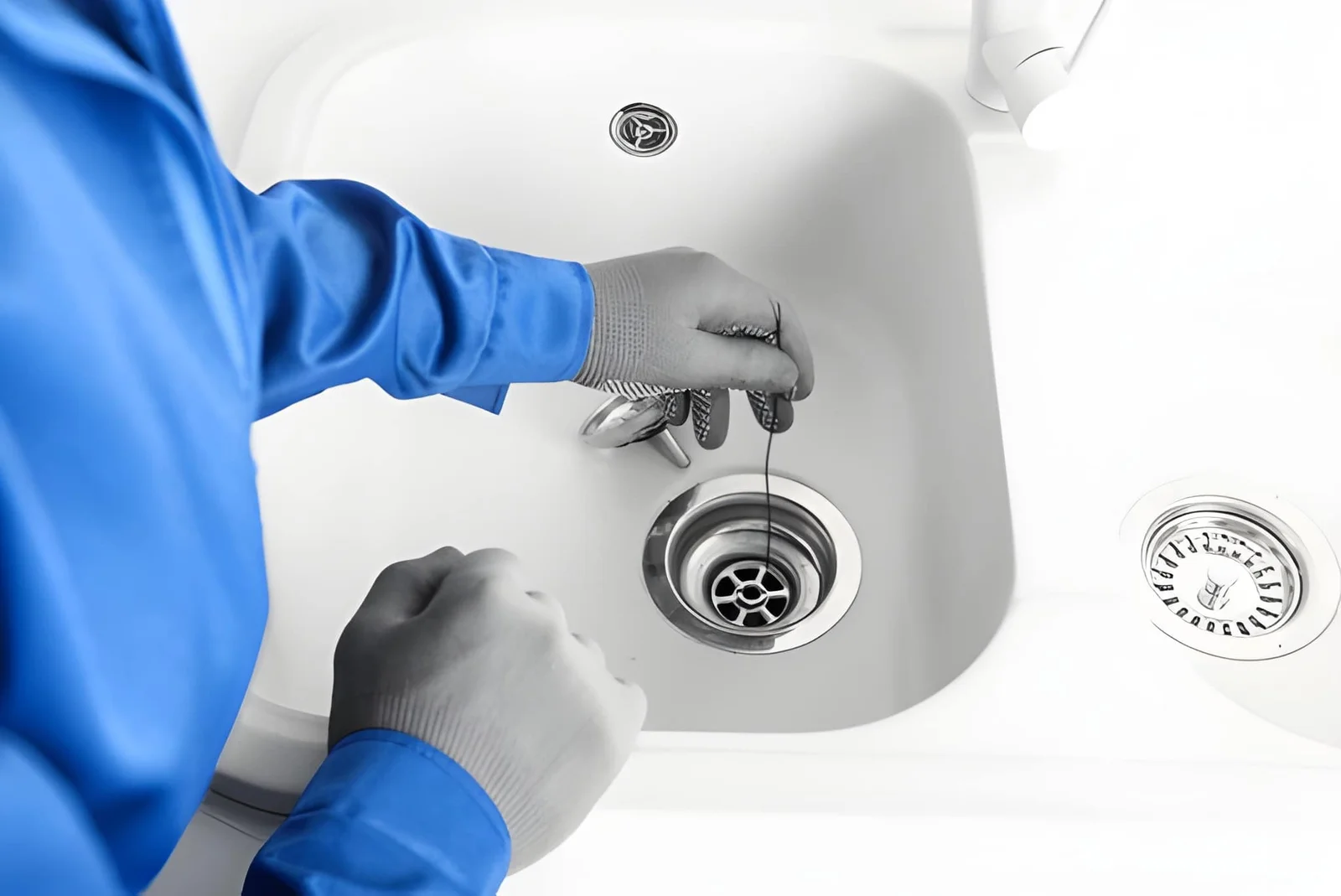
It starts small. The water lingers a few seconds longer around the drain, then a few minutes, and one night you are rinsing a pan and watching a gray pool rise around your hands. If you are wondering what you can do when your kitchen sink drains slowly, the good news is that most cases are partial clogs you can clear in under an hour with tools you already own or can buy cheaply.
I have fixed my share of these, and the order matters more than the tool. Start with the gentlest option, work toward the more involved ones, and stop at the point where the problem is no longer in the sink.
The most common mistake is reaching for a bottle of chemical drain cleaner first. It feels like the easy fix, but it can leave you with a sink full of harsh liquid that you or a plumber must then deal with.
This article is general information, not plumbing advice. Turn off power to any garbage disposal before touching it.
It covers a quick answer, a cause table, a step-by-step ladder of fixes, an honest look at baking soda and vinegar, when to call a plumber, mistakes to avoid, and a short FAQ.
What can you do when your kitchen sink drains slowly?
When your kitchen sink drains slowly, start with very hot water, then check the garbage disposal, use a sink plunger, clean the P-trap under the sink, and use a hand auger if needed. Avoid caustic chemical cleaners. If more than one drain is slow, or the clog survives all of these, call a plumber.
What causes it?
| Cause | What happens |
|---|---|
| Grease and starch | Grease and starches harden in the pipes and catch larger debris |
| Food scraps | Rice, pasta, kitchen grease, and fibrous vegetables like celery cause clogs |
| Disposal problems | Fibrous foods like celery and potato peels make a disposal worse |
| Dirty P-trap | Gooey foods like pasta and rice settle at the bottom, out of reach of an auger |
| Blocked vent | A blocked vent stack slows water, and other drains may be slow too |
| Dishwasher link | Kitchen sinks often connect to disposals and dishwashers, adding parts that can contribute to clogs |
What is the order of fixes?
| Step | Action | Notes |
|---|---|---|
| 1 | Flush with very hot water | Hot water softens and loosens grease |
| 2 | Check the disposal | Do not overload it with more than a cup of refuse at a time |
| 3 | Plunge | Use a dome-shaped sink plunger that covers the drain, with about 2 inches of water in the sink |
| 4 | Clamp the dishwasher hose | This prevents backflow while plunging |
| 5 | Clean the P-trap | Place a bucket underneath, unscrew, empty, rinse, reassemble |
| 6 | Use a hand auger | Feed a plumber’s snake into the wall pipe |
| 7 | Call a plumber | If steps 1 to 6 fail |
Repeat a method before moving on. If it is still draining slowly, repeat the process.
Does baking soda and vinegar work?
| View | Detail |
|---|---|
| Common advice | The reaction can help things flow, but it does not have a 100% success rate |
| Plumber’s caution | Baking soda and vinegar do little against hair, grease, and soap scum |
| Verdict | Safe to try for light buildup, but do not rely on it for a real clog |
Both sources disagree, so treat it as a mild first try.
What about chemical drain cleaners?
| Risk | Detail |
|---|---|
| Safety | Cleaners containing sodium hydroxide, or lye, are dangerous |
| Disposal | Caustic cleaners can be dangerous in a garbage disposal |
| Limited effect | Drain cleaner may only make a small hole in the clog |
| Later repair | A plumber may have to work around leftover chemicals |
Never mix cleaning products, and keep chemicals off your skin and eyes.
When should you call a plumber?
| Situation | Why |
|---|---|
| Still slow after trap and auger | The clog may be past the trap |
| More than one drain slow | Call if multiple drains are slow at once |
| Water backs up in several fixtures | The main sewer line may be the issue |
| Persistent odors | Call promptly |
| Leaks under the sink | Check washers and fittings |
What mistakes should you avoid?
- Pouring grease down the drain. Wipe pans first and bin the grease.
- Overloading the disposal. Feed it slowly.
- Skipping the strainer. It catches food scraps.
- Forcing a snake. Go slowly.
Frequently asked questions
Why is my kitchen sink draining slowly but not clogged?
A partial clog from grease or food is the usual cause.
Can you use boiling water?
Very hot water helps, but check your pipe material first. Hot, not boiling, is the safer choice for plastic pipes.
How do you prevent clogs?
Use a strainer, avoid grease, and flush with hot water regularly.
Bottom line
Start with hot water, a plunger, and the P-trap, then use an auger. Skip caustic cleaners, and call a plumber if other drains are slow or the clog stays. Most kitchen clogs are within reach of a careful DIYer.
For more information visit https://tipsdrhomey.org/drhomey-handy-tips/