
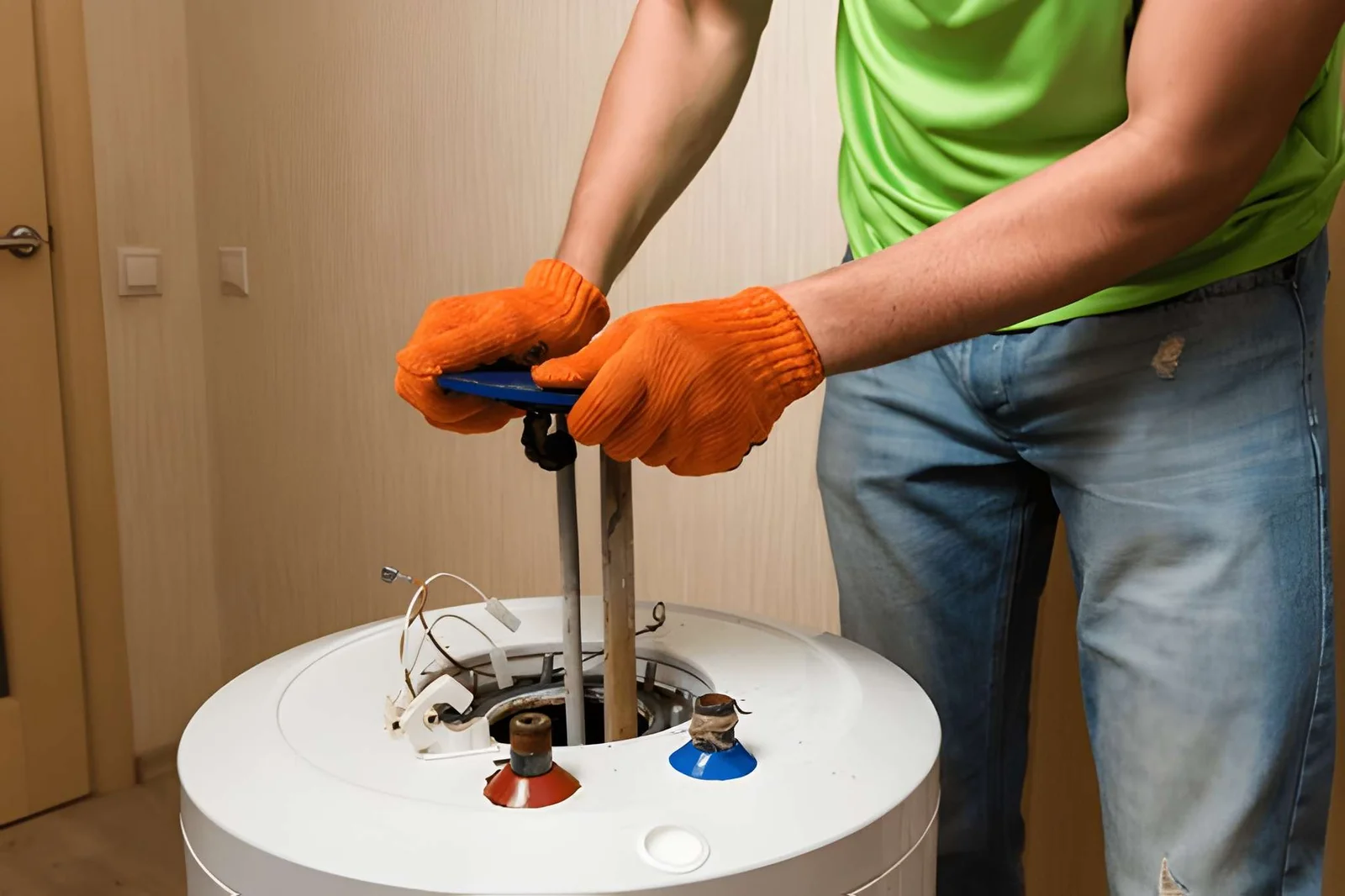
What are the early signs that your water heater needs maintenance? Watch for rumbling or popping noises, hot water that runs out sooner than it used to, rusty or cloudy water, small puddles near the base, and a tank older than about eight years. Catching these early usually costs a flush or a part, not a flooded basement.
Water heaters are easy to ignore. They sit in a closet or basement, work quietly for years, and ask for nothing. Then one morning the shower runs cold, a puddle spreads across the floor, and you realize the tank had been complaining for months. The hints were there: a faint rumble, a metallic taste, a shower that gave out five minutes sooner than usual.
Spotting the early signs your water heater needs maintenance lets you act while repairs are small and cheap. This guide covers the warning signs by what you hear, see, and notice, what each one usually means, a simple yearly care schedule, and which jobs are safe to DIY. You’ll also learn when to call a licensed plumber. It is general guidance, so follow your manual and local codes.
Early Signs Your Water Heater Needs Maintenance: The Quick Answer
The early signs your water heater needs maintenance are noises like rumbling or popping, shorter hot showers, discolored or smelly water, moisture around the tank, uneven temperatures, and age past eight to ten years. Most come from sediment, a worn anode rod, or a failing heating element.
| Sign | Likely Cause | Urgency |
|---|---|---|
| Rumbling or popping | Sediment hardening at the bottom of the tank | Medium |
| Shorter hot water supply | Sediment or a failing element | Medium |
| Rusty or brown water | Corroding tank or worn anode rod | High |
| Rotten egg smell | Bacteria reacting with the anode rod | Medium |
| Water around the base | Leak from a fitting or the tank itself | High |
| Lukewarm or swinging temperature | Thermostat or element problem | Medium |
What Do Noises, Colors, and Smells Tell You?
Rumbling is the classic early warning. Minerals settle as sediment, and water trapped underneath boils and pops through it. Over time, sediment insulates the water from the burner or element, so you pay more to heat less.
Rusty water from the hot tap only, not the cold, points to the tank or anode rod. A sulfur smell usually means bacteria, often fixed by flushing the tank and replacing the rod. A leak is different. A drip from a pipe fitting is a quick repair, but water seeping from the tank’s body usually means replacement.
If you smell gas, leave the house and call your gas utility from outside. Never ignore a pilot light that keeps going out, since it can signal a venting or carbon monoxide issue.
Which Maintenance Tasks Should You Do, and How Often?
| Task | How Often | Why It Helps |
|---|---|---|
| Flush the tank | Yearly | Removes sediment |
| Test the pressure relief valve | Yearly | Confirms the safety valve opens and reseats |
| Inspect the anode rod | Every 2 to 3 years | Slows tank corrosion |
| Check around the base and fittings | Every few months | Catches slow leaks |
| Set temperature to 120°F | Once, then check | Reduces scalding risk and saves energy |
| Insulate hot pipes | Once | Cuts heat loss |
The US Department of Energy and the Consumer Product Safety Commission both recommend a setting of about 120°F for most homes.
How Old Is Too Old for a Water Heater?
Most tank heaters last roughly 8 to 12 years, depending on water quality and upkeep. Tankless models often run 15 to 20 years or more with regular descaling. Find the serial number on the label to decode the age, and check the manufacturer’s chart.
| Water Heater Type | Typical Lifespan | Common Early Warning |
|---|---|---|
| Gas tank | 8 to 12 years | Rumbling, pilot problems |
| Electric tank | 10 to 15 years | Lukewarm water, tripping breaker |
| Tankless | 15 to 20 years | Error codes, mineral buildup |
What Can You DIY, and When Should You Call a Pro?
| Job | DIY or Pro |
|---|---|
| Flushing the tank | DIY, if you’re comfortable with a hose and shutoff valves |
| Testing the pressure relief valve | DIY, with the discharge pipe pointing safely down |
| Replacing a thermostat or element | Pro unless you have electrical experience |
| Replacing an anode rod | DIY with the right tools, or pro |
| Gas line, venting, or pilot issues | Pro only |
| Any leak from the tank body | Pro, since replacement is likely |
Always turn off power or gas before working on the unit. If you’re unsure, a licensed plumber is the safer choice.
FAQ
Is a noisy water heater dangerous?
Usually not right away, but heavy sediment shortens the tank’s life and wastes energy. Have it flushed soon.
How can you tell if the water heater is leaking?
Check for damp spots, rust streaks, or puddles around the base and pipe connections. Dry them and check again in a few hours.
Should you repair or replace?
If the tank is past ten years and leaking, or repairs cost more than half a new unit, replacement is usually the better value.
The bottom line: the early signs your water heater needs maintenance are small and easy to hear or see. Act on noise, color, moisture, and age before they turn into an emergency.
for more information visit https://tipsdrhomey.org/
[…] water is another quiet cost. Lower the water heater temperature to one hundred twenty degrees. This cuts energy use and scald risk. Hot water pipelines […]