
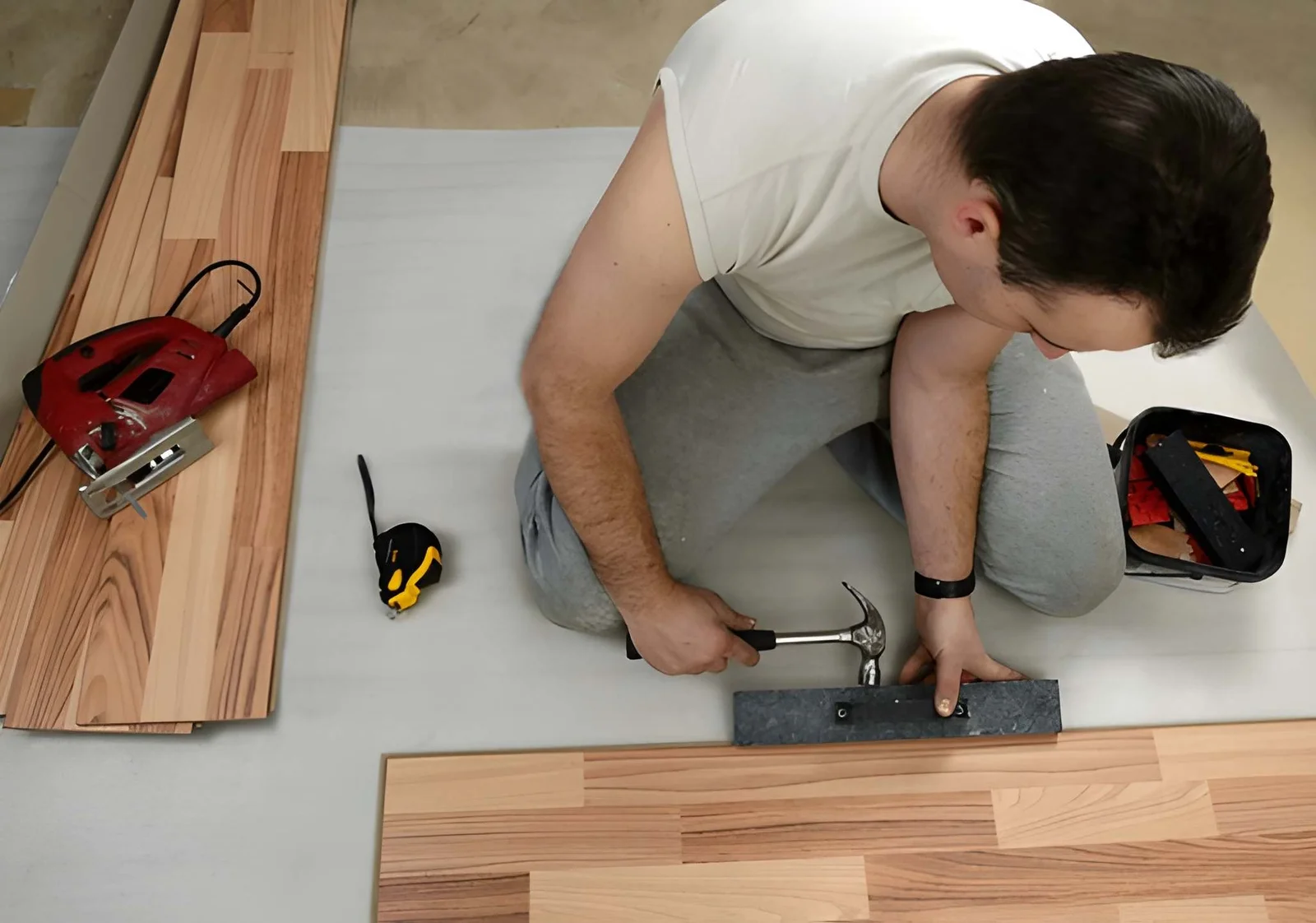
How can you stop squeaky floorboards without replacing the flooring? Find where the noise starts, then fix the gap causing it. Most squeaks come from a board or subfloor rubbing against a nail or joist, and a screw, a shim, or a dusting of powder usually quiets it in under an hour.
It always starts the same way. You’re carrying a sleeping toddler down the hall at 11 p.m., and one board announces you to the entire house. You step left. It squeaks. You step right. It squeaks louder. Eventually you stop walking and just stand there, defeated by a plank.
The good news is that you rarely need new floors. A squeak is friction, and friction can be removed. The tough part is learning which type of squeak you have, because the fix for carpet over plywood is different from the fix for old hardwood.
This guide shows you how to locate the problem, a method for each floor type, a tools and cost table, and the mistakes that cause bigger damage. It is general guidance, so follow product instructions and local codes.
How to Stop Squeaky Floorboards: The Quick Answer
To stop squeaky floorboards, find the squeaking spot, locate the joist beneath it, and remove the movement. From above, drive a trim screw through the flooring into the joist, or use a screw-kit that snaps off below the surface. From below, add a shim with wood glue. For light squeaks, work powder lubricant into the seams.
| Cause | What You Hear | Best Fix |
|---|---|---|
| Subfloor lifted from joist | Loud squeak when stepped on | Screw down into joist |
| Boards rubbing together | Light chirp along seams | Powder lubricant |
| Gap between joist and subfloor | Hollow creak | Glued shim from below |
| Loose nail | Sharp pop | Replace with a screw |
| Dry air shrinking wood | Seasonal squeaking | Humidity control |
How Do You Find the Source of the Squeak?
Have a helper walk across the floor while you listen and watch. Mark each noisy spot with painter’s tape. Then use a stud finder, or tap and listen, to locate the joists, which usually run 16 inches apart.
If you can reach the ceiling below, such as a basement, check from there. Have someone step on the board while you watch for movement between the subfloor and joist. That gap is your answer.
Which Method Works for Each Floor Type?
| Floor Type | Method | Difficulty |
|---|---|---|
| Carpet | Squeak-fix screw kit that breaks off beneath the carpet | Easy |
| Hardwood | Angled trim nails or screws, countersunk and filled | Moderate |
| Laminate or vinyl plank | Usually hard to fix from above; work from below or use powder at seams | Moderate |
| Any floor, access from below | Glued shim or screw upward through subfloor | Easy |
Fixing from below is often the best option. Drive a screw up through the subfloor into the flooring, but choose a length that won’t poke through the top. Subfloor and flooring thickness vary, so measure first.
Which Tools and Supplies Do You Need?
| Item | Purpose | Cost Level |
|---|---|---|
| Stud finder | Locate joists | Low |
| Squeak-fix kit | Carpet and some hardwood repairs | Low to moderate |
| Trim screws and drill | Pull boards tight | Low |
| Wood glue and thin shims | Fill gaps from below | Low |
| Talcum or graphite powder | Reduce seam friction | Low |
| Safety glasses | Protect your eyes | Low |
Skip oil sprays on hardwood, since they can stain the wood and may harm the finish.
What Is the Step-by-Step Fix for Hardwood?
First, confirm the board is loose, not just dry. Drill a small pilot hole through the board at an angle, then drive a trim screw into the joist. Use two angled fasteners in opposite directions to lock the board better. Set the head slightly below the surface, fill the hole with matching wood filler, and touch up the finish. For seam squeaks, sprinkle powder, work it in with a soft brush, and wipe away the excess.
What Mistakes Make Squeaks Worse?
Avoid these errors:
- Guessing at joist locations. Missing the joist leaves a hole and no fix.
- Screws that are too long. They can hit pipes or wires, or pop through the surface.
- Pounding boards flat with a hammer. This often damages the floor.
- Ignoring humidity. Winter air can dry and shrink wood, causing seasonal squeaks.
Before drilling, check for plumbing and electrical lines, especially near bathrooms and kitchens. If you’re unsure, ask a licensed contractor.
FAQ
Why do floors squeak more in winter?
Heating dries indoor air, and wood can shrink slightly. That creates small gaps where boards rub.
Does baby powder really work?
It can quiet minor seam squeaks by reducing friction. It’s a temporary fix, not a repair for loose subfloor.
When should you call a pro?
Call one if the floor sags, bounces, or squeaks in many places, since that may signal a structural issue.
The bottom line: to stop squeaky floorboards, find the loose spot, secure it to the joist, and use powder only for light seam noise. Most floors can stay exactly where they are.
for more information visit https://tipsdrhomey.org/