
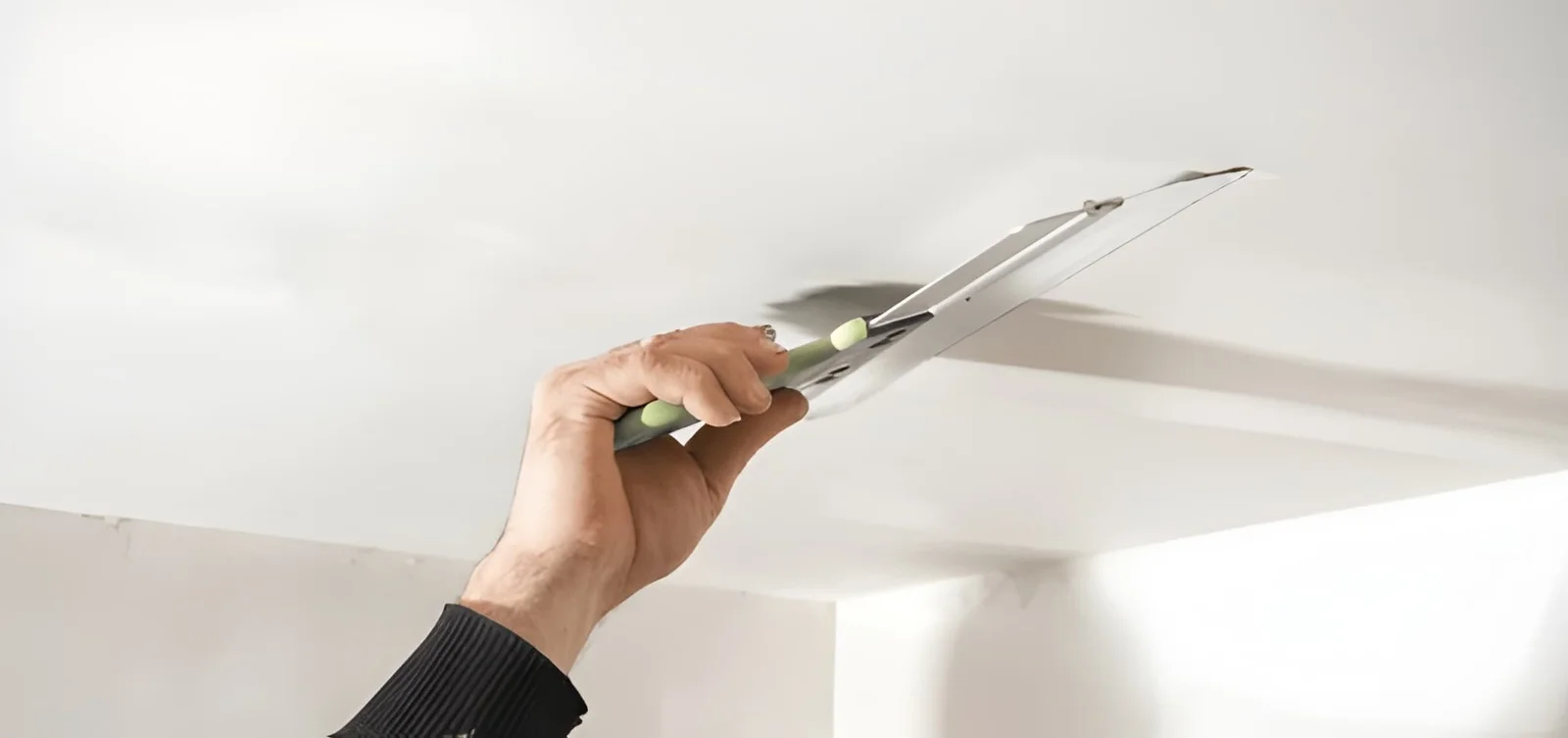
How can you repair small holes and cracks in drywall at home? Match the fix to the size. Nail holes need spackle, holes up to about half an inch need a thin coat of joint compound, and larger holes need a mesh patch. Cracks need tape and compound. Most jobs take under an hour of work, plus drying time.
You hang a picture, change your mind, and now there’s a hole. Or you notice a thin line creeping from the corner of a door frame and tell yourself it’s nothing. A few weeks later, the hole has company, and the crack has grown. Small drywall damage has a way of multiplying in the one room you’re trying to sell, rent out, or show off.
Fixing it yourself is realistic. Drywall is forgiving, the materials are cheap, and the skills are simple. The part most people get wrong isn’t the filling. It’s the sanding, the priming, and the patience between coats.
This guide shows you how to repair small holes and cracks in drywall at home, with a size-to-fix chart, a tool list, a step-by-step method, and the mistakes that leave a visible ghost patch. It is general guidance, so follow product labels.
Repair Small Holes and Cracks in Drywall: The Quick Answer
To repair small holes and cracks in drywall, clean the area, fill with spackle or joint compound, let it dry, sand smooth, prime, and repaint. Use a self-adhesive mesh patch for holes larger than half an inch, and drywall tape for cracks. Apply thin coats rather than one thick one.
| Damage | Best Fix | Dry Time (Approx.) |
|---|---|---|
| Nail or screw hole | Lightweight spackle | 30 minutes to a few hours |
| Dent or small ding | Spackle, 1 to 2 thin coats | 1 to 2 hours per coat |
| Hole up to 1/2 inch | Joint compound over a mesh patch | Overnight between coats |
| Hole 1/2 to 6 inches | Self-adhesive mesh patch and compound | Overnight between coats |
| Hairline crack | Compound, lightly feathered | Several hours |
| Recurring crack at a seam | Drywall tape and compound | Overnight between coats |
Drying times vary with humidity and thickness, so check your product’s label.
What Tools and Materials Do You Need?
| Item | Purpose |
|---|---|
| Putty knife (3 to 6 inch) | Applies and smooths filler |
| Lightweight spackle or all-purpose joint compound | Fills holes and cracks |
| Self-adhesive mesh patch | Bridges larger holes |
| Drywall tape (paper or mesh) | Reinforces cracks |
| Fine sanding sponge (120 to 220 grit) | Smooths dried filler |
| Primer | Prevents flashing, where paint looks dull over the patch |
| Dust mask and safety glasses | Protects against fine dust |
How Do You Repair Small Holes in Drywall Step by Step?
Clean away loose paper and crumbs first. For tiny holes, press spackle in with the knife held flat, scrape across, and leave a slight mound since it shrinks. For holes up to an inch or two, press a mesh patch over the hole, then spread joint compound over it, feathering the edges a few inches beyond.
Let it dry, sand lightly, then apply a second thin coat and sand again. Wipe off dust, prime the area, and paint. Skipping the primer is the top reason patches show through.
How Do You Fix Cracks in Drywall That Keep Coming Back?
A hairline crack can get a thin coat of compound. A crack that returns usually means movement, so it needs tape. Scrape out loose material, lay in tape, and cover it with compound, widening each coat by an inch or two. Sand when dry and prime.
| Crack Type | Likely Cause | What to Do |
|---|---|---|
| Hairline, random | Settling or temperature changes | Fill and paint |
| Corner of a door or window | Normal framing movement | Tape and compound |
| Long, wide, or growing | Possible structural or moisture problem | Call a pro |
| Stair-step in brick or exterior wall | Foundation concerns | Call a structural engineer |
What Mistakes Leave a Visible Patch?
| Mistake | Better Approach |
|---|---|
| One thick coat | Two or three thin coats |
| Not feathering edges | Spread compound wide and thin |
| Sanding too early | Wait until fully dry |
| Painting over bare compound | Prime first |
| Ignoring water stains | Find and fix the leak, then repair |
Older homes need extra care. The EPA notes that homes built before 1978 may have lead paint, and some older joint compounds contained asbestos. If your house predates those changes, test before sanding or scraping.
FAQ
What is the easiest way to fill a nail hole in drywall?
Press a small dab of lightweight spackle in with a putty knife, scrape it flush, and sand lightly once dry.
Can you paint directly over spackle?
It’s better to prime first. Bare spackle absorbs paint differently, which creates a dull spot.
How long does drywall repair take?
Hands-on time is usually under an hour, but drying between coats often stretches the job across a day or two.
The bottom line: to repair small holes and cracks in drywall at home, choose the right filler for the size, apply thin coats, sand, and prime. Patience beats speed here.
for more information visit https://tipsdrhomey.org/