
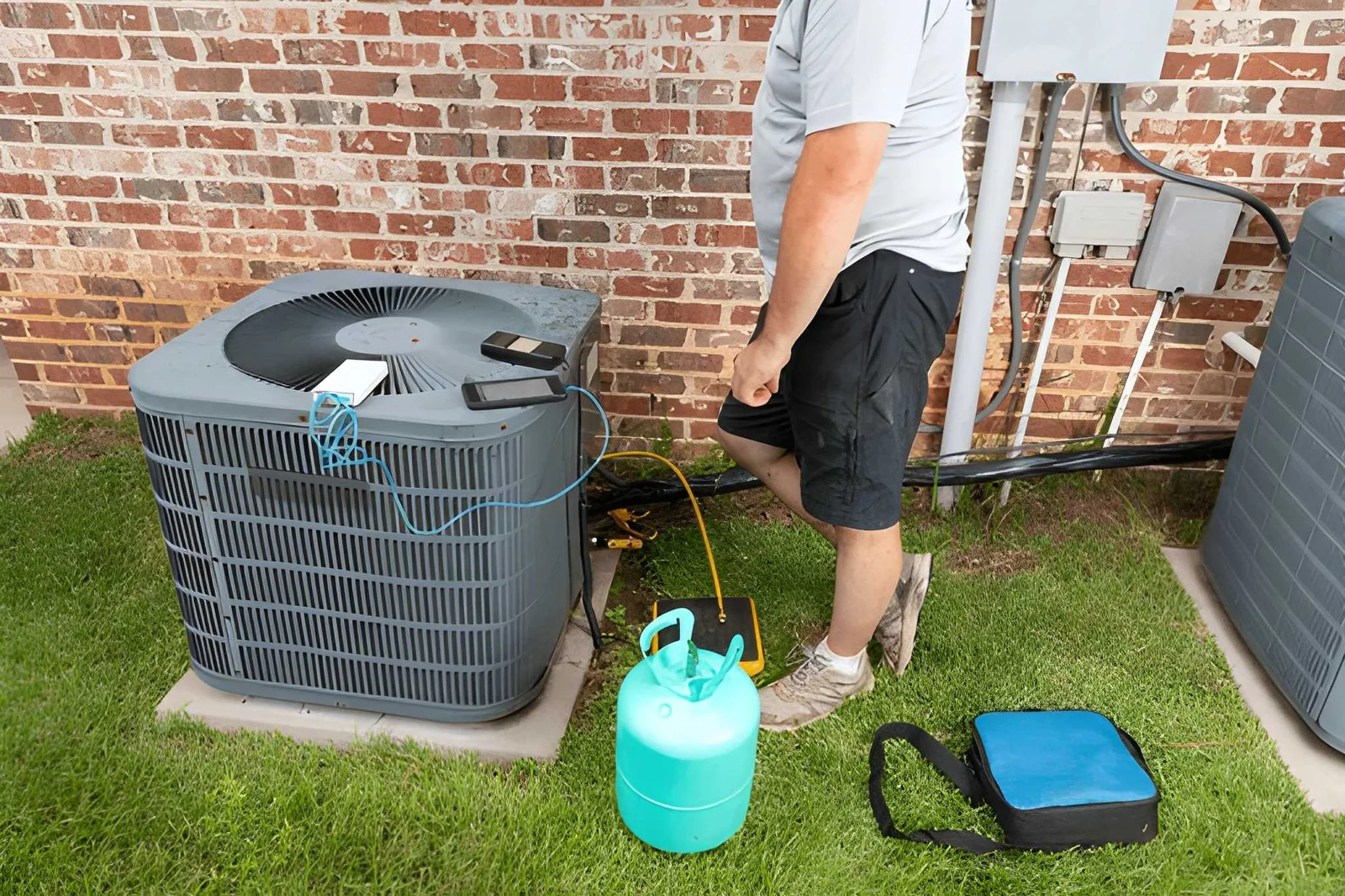
Why does your air conditioner lose cooling efficiency, and how can you improve it? Most losses come from five causes: a clogged filter, dirty coils, low refrigerant from a leak, blocked airflow, and aging parts. Start with the filter and the outdoor unit. Those two fixes are cheap, safe, and solve many cases.
It rarely fails all at once. First the living room takes an extra hour to cool. Then the bedroom upstairs stays muggy. You nudge the thermostat down two degrees, the electric bill creeps up, and the system runs nearly nonstop. Nothing is broken, so nothing gets fixed.
That slow drift is exactly how an air conditioner loses cooling efficiency. Dust, heat, and wear steal a little performance each month, and you pay for it in comfort and money.
This guide explains the common causes, how to diagnose them with a simple temperature check, which fixes you can do yourself, and when a licensed HVAC technician is the right call. It is general guidance, so follow your equipment manual and local codes.
Why an Air Conditioner Loses Cooling Efficiency: The Quick Answer
An air conditioner loses cooling efficiency when airflow or heat transfer drops. Dirty filters, grimy coils, low refrigerant, leaky ducts, and failing parts all force the system to run longer for less cooling. Replace the filter, clear the outdoor unit, and clean the coils first. If it still struggles, call a technician.
| Cause | What You Notice | Who Fixes It |
|---|---|---|
| Clogged air filter | Weak airflow, dust, longer run times | You |
| Dirty evaporator or condenser coil | Warm air, higher bills | You or a pro |
| Low refrigerant (leak) | Ice on lines, warm air, hissing | Licensed pro only |
| Blocked outdoor unit | Unit runs hot, short cooling | You |
| Leaky or dirty ducts | Hot rooms far from the unit | Pro |
| Thermostat error | Short cycling or wrong temperature | You or a pro |
| Worn capacitor or fan motor | Humming, fan not spinning | Pro |
How Can You Tell If Your AC Has Lost Efficiency?
Do a quick temperature split test. Measure the air entering the return vent and the air leaving a nearby supply vent after the system has run about 15 minutes. A difference of roughly 15 to 20°F is a common healthy range, though the right number depends on humidity and the equipment.
| Test Result | What It May Mean |
|---|---|
| Difference around 15 to 20°F | Likely normal |
| Difference under 14°F | Airflow or refrigerant issue |
| Ice on the indoor coil or refrigerant line | Low airflow or low refrigerant, shut the system off |
| Water around the indoor unit | Clogged condensate drain |
Which Fixes Can You Do Yourself?
Start with free or low-cost jobs. According to the US Department of Energy, replacing a dirty filter can lower an air conditioner’s energy use by about 5 to 15 percent.
| DIY Fix | How Often | Notes |
|---|---|---|
| Replace the filter | Every 1 to 3 months in cooling season | Check the size printed on the frame |
| Clear the outdoor unit | Monthly in summer | Keep about 2 feet of space and trim plants |
| Rinse the outdoor coil | Once or twice a year | Power off first, use a gentle hose, no pressure washer |
| Flush the condensate drain | Seasonally | A cup of vinegar or warm water helps |
| Open and unblock vents | Anytime | Furniture and rugs often cover them |
| Adjust thermostat settings | Once | Avoid dropping it far below your target |
Always shut off power at the disconnect before touching the outdoor unit.
When Should You Call an HVAC Professional?
Refrigerant is a sealed system. If it’s low, there’s a leak, and topping it off without repair wastes money. In the US, handling refrigerant requires EPA Section 608 certification. A pro can also measure airflow, test capacitors, seal ducts, and check electrical parts that carry real shock risk.
| Call a Pro If | Why |
|---|---|
| Ice builds up repeatedly | Could indicate a leak or airflow fault |
| Breaker trips | Electrical problem |
| Hissing or oily residue | Possible refrigerant leak |
| System is over 10 to 15 years old | Efficiency may be hard to restore |
| Some rooms never cool | Duct or sizing problem |
Is It Time to Replace Instead of Repair?
Many systems last 10 to 15 years. If yours is older and needs a costly repair, compare that bill to the cost of a newer, higher-efficiency unit. Ask for a load calculation too, since an oversized system cools fast but removes less humidity, which can leave the house feeling clammy.
FAQ
Why is my AC running but not cooling well?
The usual suspects are a dirty filter, dirty coils, or low refrigerant. Check the filter and outdoor unit first.
How often should you service an air conditioner?
Once a year, ideally in spring before heavy use.
Does a higher SEER rating help?
Yes. A higher SEER rating means more cooling per unit of electricity, but proper installation and maintenance matter just as much.
The bottom line: when an air conditioner loses cooling efficiency, begin with the filter, clear the outdoor unit, and clean the coils. Leave refrigerant and electrical work to a licensed technician.
for more information visit https://tipsdrhomey.org/