
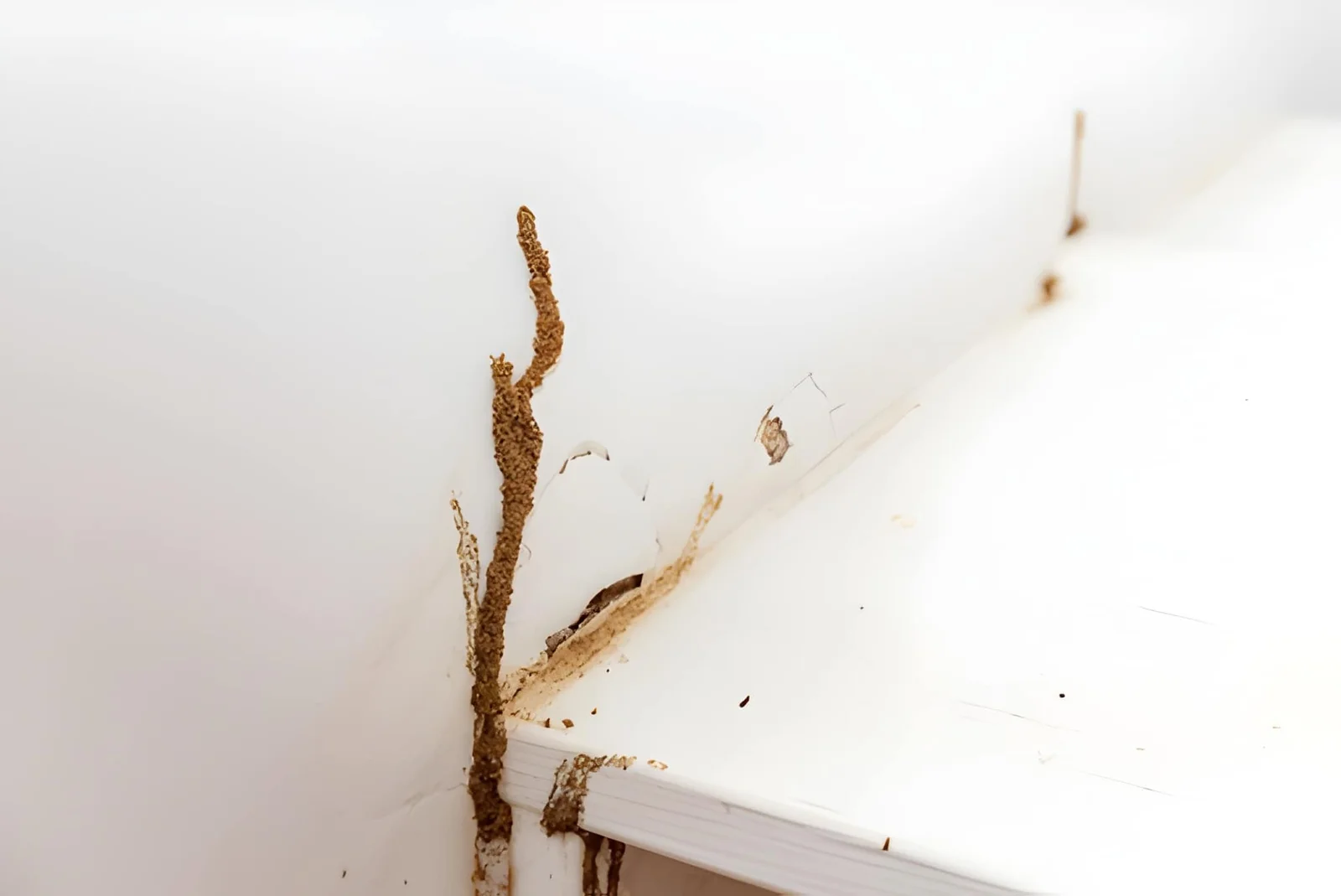
Termites are quiet. They eat from the inside, leave the surface intact, and often announce themselves only when a door sticks or a floor feels soft. If you are asking how to identify termite damage before it weakens wooden structures, the best approach is to learn each kind of termite’s evidence signature. Different species leave different clues, and knowing which clue to look for tells you where to look.
The clue that surprises most people is how different those signatures are. Subterranean termites build pencil-width mud tubes. Drywood termites do not, so an absence of mud tubes is not proof that you do not have termites.
I have seen a homeowner clean up a pile of “sawdust” for a year before realizing it was termite frass, and another poke a screwdriver into a windowsill that looked perfect and watch it sink in.
This article is general information, not a pest inspection. It covers a quick answer, an evidence-by-species table, a look-alike comparison, a safe inspection routine, what to do if you find signs, mistakes to avoid, and a short FAQ.
How can you identify termite damage before it weakens wooden structures?
Identify termite damage by looking for mud tubes, discarded wings, pellet-like droppings called frass, hollow-sounding wood, blistered or bubbling paint, and tight-fitting doors or windows. Tap wood and probe it with a screwdriver, check moisture-prone areas with a flashlight, and call a licensed pest professional if you find signs.
What does each type leave behind?
| Type | Evidence | Source note |
|---|---|---|
| Subterranean | Mud tubes | Pencil-diameter tubes that connect the nest to a food source |
| Subterranean | Hollowed wood | Wood hollowed from the inside, with tunnels following the grain |
| Drywood | Frass | Hard, elongated pellets with six concave sides, about 1 mm long, colored to match the wood |
| Drywood | No mud tubes | They do not live in the ground or build mud tubes |
| Drywood | Blistering | Surface blistering or warping is a sign of advanced infestation |
| Dampwood | Soft, soggy wood | Found in or near decaying wood, with hollow or squishy wood and a lack of frass |
| All types | Discarded wings | Clumps near closed doors and windows, since termites shed wings after landing |
What else looks like termite damage?
| Look-alike | How it differs |
|---|---|
| Carpenter ants | They do not eat wood but excavate galleries to nest, and you may see sawdust |
| Water damage | Subterranean termites can cause issues that look a lot like water damage |
| Wood rot | Can resemble termite signs, and both are attracted to moisture |
| Flying ants | Termite swarmers have two pairs of identical wings, while winged ants have uneven wings |
Termite bodies are straight, not pinched at the waist like ants.
How do you inspect safely?
| Step | Action |
|---|---|
| 1 | Walk the attic, crawl spaces, garage, window frames, and floors with a bright flashlight |
| 2 | Tap on wood and listen for hollow sounds, or press a screwdriver tip against it |
| 3 | Check for mud tubes on foundation walls, piers, plumbing pipes, and crawlspaces |
| 4 | Look for frass piles near baseboards, window sills, and attic framing |
| 5 | Use a moisture meter, since damage often coincides with elevated moisture |
| 6 | Break open a small section of a mud tube to see if live termites are inside |
Focus on baseboards, window and door frames, closets, bathroom walls, and anywhere wood meets soil.
What advanced signs matter?
| Sign | Meaning |
|---|---|
| Sticking doors | Check for other termite signs nearby if they jam and it is not due to weather |
| Soft or buckling floors | A sign of damage that may have progressed |
| Clicking in walls | Listed among reported signs |
| Sagging floors or weakened beams | Signs of structural instability, which can also come from carpenter ants |
What should you do if you find signs?
| Action | Why |
|---|---|
| Photograph and date it | Helps the inspector |
| Do not disturb it | Avoid spreading the colony |
| Call a licensed professional | A termite expert will probe the area further or take moisture readings |
| Fix moisture problems | Reduces future attraction |
| Treat before repairing | Remove the colonies first, or recurring problems can cost more |
What mistakes should you avoid?
- Assuming no mud tubes means no termites. Drywood termites do not build them.
- Cleaning up frass and moving on. It signals active drywood termites.
- Painting over blisters. Hidden galleries remain.
- Treating before identifying. The right treatment depends on the type.
Frequently asked questions
How often should you check for termites?
Check seasonally and after leaks. Many owners also book a professional inspection yearly.
Do termites always leave visible signs?
No. Damage can hide inside wood for a long time.
Can you test wood yourself?
Yes, with a screwdriver. A professional should confirm any suspect area.
Bottom line
Learn each species’ clues, tap and probe suspect wood, check moisture-prone spots, and call a licensed professional if you find signs. Early identification protects the structure.
for more information visit https://tipsdrhomey.org/