
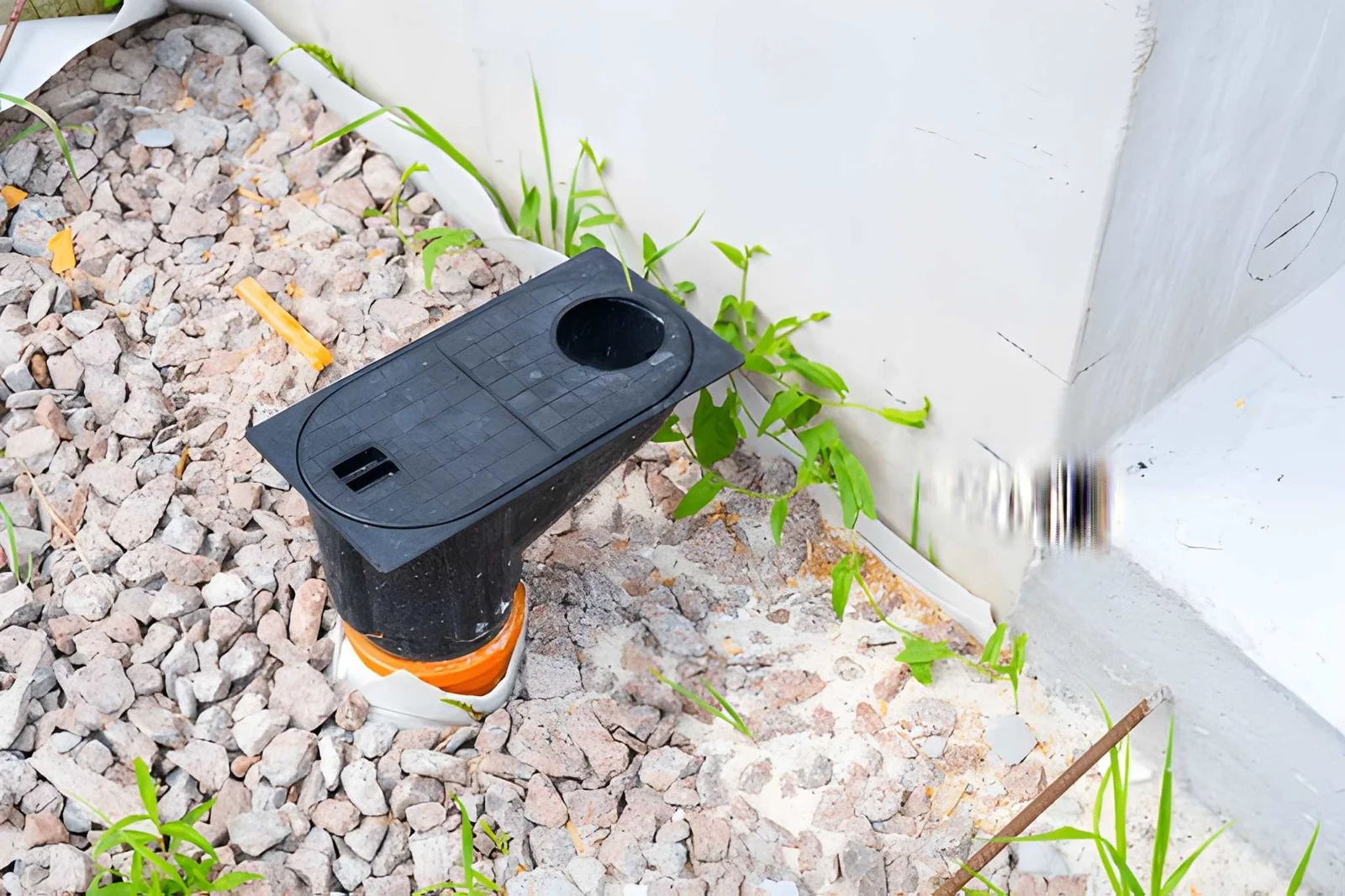
Most people think of a home’s drainage system as the gutters. In reality it is a chain, and rain follows it from the roof to the street. Water leaves the shingles, travels through a gutter, drops down a downspout, crosses the yard, slips into a drain or a pit, and finally leaves your property. A clog anywhere in that chain pushes water back toward the house. If you are asking how to keep your home’s drainage system clear during the rainy season, the most useful method is to walk the chain in order and clear the first blocked link you find.
One city’s drainage guide draws the same picture: roof runoff, clear gutter trough, downspout pipe, extension pipe, and a safe discharge zone. It also warns that just one backed-up catch basin can flood a whole yard or driveway.
I have seen owners spend a weekend on gutters and then lose the basement to a pump that never turned on. The weak link was the last one they tested.
This article is general information, not a drainage design or plumbing opinion. It covers a quick answer, a chain table, a sump pump test, indoor drain checks, a rainy-season routine, mistakes to avoid, and a short FAQ.
How can you keep your home’s drainage system clear during the rainy season?
Keep drainage clear by checking the whole chain: gutters and downspouts, ground-level yard drains and grates, window wells, the street catch basin in front of your home, interior floor drains, and the sump pump. Clear debris, test the pump by pouring water into the pit, and check that every outlet drains away from your foundation.
What does the chain look like?
| Link | What to check | Source note |
|---|---|---|
| Gutters and downspouts | Clear debris, extend outlets | Do not direct roof water to a neighbor or directly to the street |
| Yard and patio drains | Clear surface drain openings and pop open covers to check for roots and dirt | Weekly in heavy rain |
| Driveway channels | Remove debris from grates on driveway and garage channel systems | Before storms |
| Window wells | Clear dead leaves and debris from window wells and exterior stairwells | Before heavy rain |
| Street drain | Remove leaves and debris from storm drains and catch basins, and report damage to your utility | Check local rules |
| Floor drains | Remove items blocking drainage to the floor drain and test it | Seasonally |
| Sump pump | Test and clear the discharge | See below |
How do you test a sump pump?
| Step | Action |
|---|---|
| 1 | Make sure the pump is plugged in and the power source is working |
| 2 | Pour a bucket of water slowly into the sump pit |
| 3 | Watch the float switch rise with the water level |
| 4 | Run the pump and confirm water flows freely out of the discharge pipe |
| 5 | Check the outlet for dirt, leaves, or debris |
| 6 | Test your battery backup per the manufacturer’s instructions |
Sources suggest different test frequencies. Every few months, with a full check before storm season is a common rhythm, and some plumbers say monthly. Many pumps last 7 to 10 years.
What should the ground do?
| Item | Guidance |
|---|---|
| Soil slope | Slope soil around the foundation and window wells away from the house for at least 2 to 3 metres, with a drop of at least 10 to 20 cm |
| Sump discharge | If it drains to the yard, check that it drains properly and away from the foundation |
| Pooling | Check for water pooling near foundation walls, including window wells and stairwells |
What is a rainy-season routine?
| When | Task |
|---|---|
| Before the season | Full check of the chain, pump test, battery backup test |
| Weekly during heavy rain | Walk the property, clear grates and window wells |
| After each big storm | Look for pooling, overflow, and sagging gutters |
| Monthly | Quick pour test on the sump pump |
| Twice a year | Clean the basin and pump |
What should you avoid?
| Mistake | Why |
|---|---|
| Piling yard waste in the street | Storm sewers are not designed to handle large volumes of leaves and may block with twigs |
| Sending water to a neighbor | It can create problems and liability |
| Ignoring a slow drain | If slow draining persists, you may need hydro-jetting |
| Skipping the backup power | Storms often cut power |
| Testing only gutters | The last link may be the one that fails |
Frequently asked questions
What is the most commonly missed drainage link?
The sump pump, window wells, and outdoor drain grates.
Should you clear the storm drain on your street?
Clearing debris from the surface is generally fine, but report damage to your utility and follow local rules.
Do you need a battery backup?
A backup helps keep the pump running when a storm knocks out the power.
Bottom line
Walk the drainage chain from roof to street, clear what you find, test the pump, and keep water moving away from the foundation. Do the big check before the rain starts, and quick checks during it.
for more information visit https://tipsdrhomey.org/