
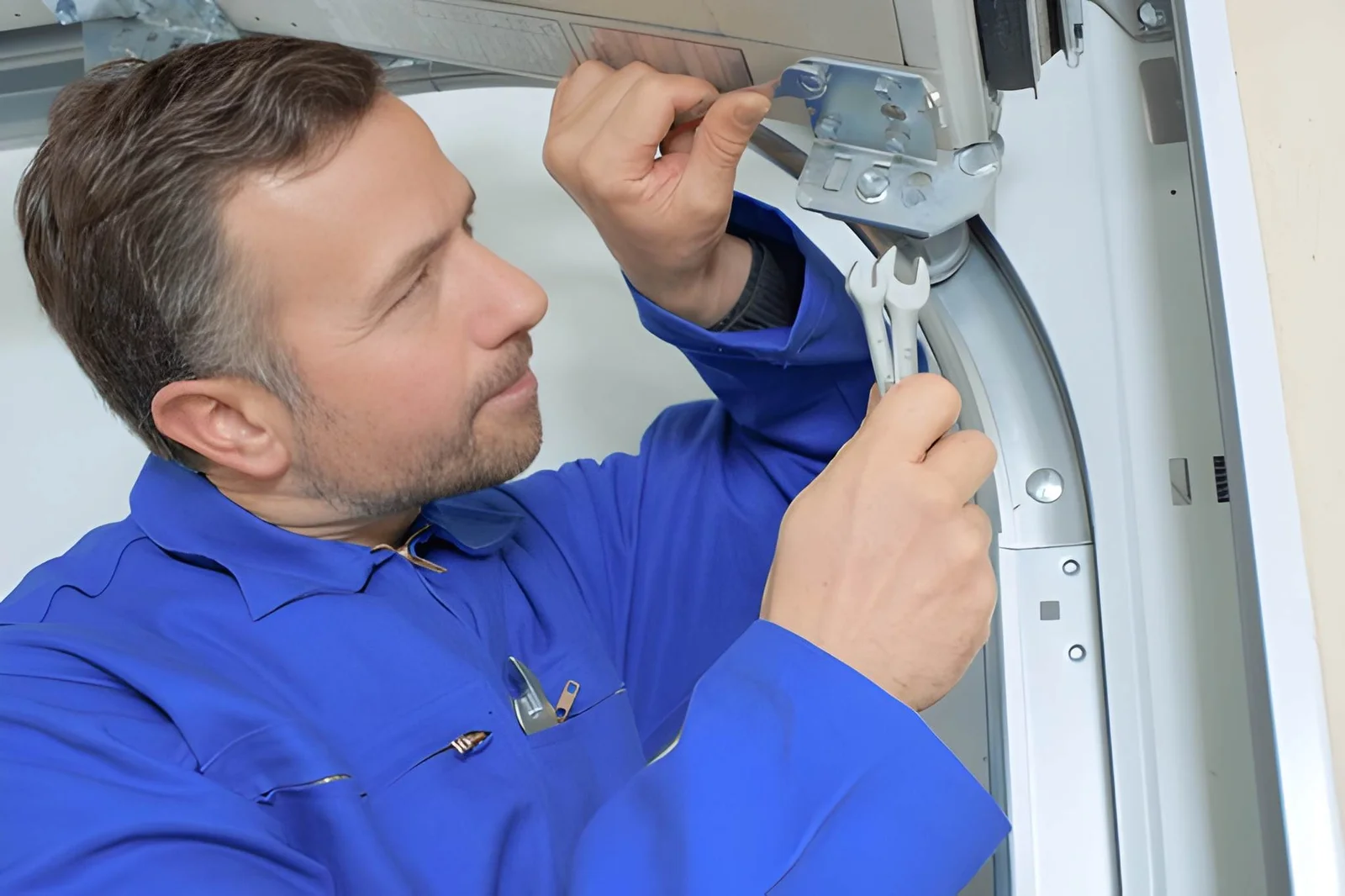
A garage door rarely fails without warning. It gets louder, slower, or a little jerky first, and most owners notice and turn up the radio. Then one cold morning a spring lets go, and the biggest moving object in the house is stuck halfway. If you are asking how to maintain your garage door to prevent unexpected breakdowns, the plan is a short routine: look, listen, test, lubricate, and know which parts are never yours to touch.
The Door and Access Systems Manufacturers Association frames it as monthly checks plus twice-a-year lubrication. Its guidance says to look over the springs, cables, rollers, and pulleys from inside the garage with the door closed, and to have a trained technician inspect the system when in doubt.
I have found that the five-minute monthly check catches most problems early, and the annual professional visit catches the ones that look fine to an untrained eye.
This article is general information, not a repair guide for your specific door. Always follow your manufacturer’s manual. It covers a quick answer, a schedule table, the three safety tests, a lubrication guide, what never to touch, mistakes to avoid, and a short FAQ.
How can you maintain your garage door to prevent breakdowns?
Maintain your garage door with a monthly visual check, a balance test, an auto-reverse and photo-eye test, a light lubrication every three to six months, tightened hardware, clean tracks, and an annual professional inspection. Never adjust or remove springs, cables, or bottom brackets yourself, since they hold dangerous tension.
What is the schedule?
| Frequency | Tasks |
|---|---|
| Monthly | Visual inspection of springs, cables, rollers, and pulleys, balance test, photo-eye test, auto-reverse test |
| Every 3 to 6 months | Lubricate moving parts, more often in harsh weather |
| Quarterly | Inspect rollers, tighten hinge bolts, and check the remote battery |
| Yearly | Professional tune-up: spring tension, cables, hardware torque, and sensor alignment |
| Any time | Listen for new grinding, squeaks, or shaking |
What three tests matter most?
| Test | How | Pass | If it fails |
|---|---|---|---|
| Balance | Disconnect the opener, lift the door halfway, and let go | The door stays put | If it falls or rises, call a professional to adjust the springs |
| Auto-reverse | Place a solid object like a wooden block or roll of paper towels in the door’s path | The door reverses right after contact | The sensors need adjustment |
| Photo eyes | Wave your hand or an object in front of the sensors while the door closes | It reverses at once | Wipe the sensors, check alignment, and troubleshoot or call a professional |
Do the balance test with the door closed and the opener disconnected.
What should you lubricate?
Sources disagree on products, so check your manual first.
| Source view | Guidance |
|---|---|
| Industry association | Apply a small amount of spray lubricant to hinges, rollers, and tracks twice a year |
| Door manufacturer | Lubricate hinges, rollers except nylon, bearings, torsion springs, and lift cables annually |
| One manual | Use a non-silicone lubricant such as 10W-30 motor oil, and do not lubricate nylon rollers or tracks |
| Other guides | Use a garage door lubricant, not WD-40, and avoid over-lubricating |
| Another view | Unless the manufacturer says otherwise, white lithium grease works for hinges and rollers |
The safe rule is a light coating, no nylon rollers, and the product your manual names.
What should you never touch?
| Part | Why |
|---|---|
| Springs | Under high tension, so call a technician |
| Lift cables | Frayed cables should be replaced immediately by a professional |
| Bottom brackets | Connected to the same tension system |
| Track realignment | Improper alignment can cause serious damage |
| Complex opener faults | Need professional diagnosis |
If you can tighten it with a socket, it is probably yours. If it holds tension, it is not.
What signs mean call now?
| Sign | Likely issue |
|---|---|
| Loud bang | Broken spring |
| Door will not stay halfway | Imbalance |
| Fraying or rust | Cable or spring wear |
| Door reverses on its own | Sensor misalignment or dirt |
| Jerky or shaky movement | Worn springs, broken hinges, cracked panels, or frayed cables can cause a noisy door |
What mistakes should you avoid?
- Ignoring noise. It is the earliest warning.
- Over-lubricating. Excess grease attracts dust.
- Skipping sensor tests. They protect people and pets.
- Attempting spring work. It is the most common serious injury source.
Frequently asked questions
How often should you service a garage door?
Check monthly, lubricate twice a year, and book a professional visit yearly.
Can you use WD-40?
Some sources advise against it for lubrication. Use the product your door maker recommends.
What if the door is off-balance?
Stop using the opener and call a technician.
Bottom line
Look, listen, and test monthly, lubricate lightly, tighten what you can safely reach, and let a professional handle springs and cables. A short routine can prevent a sudden failure.
for more information visit https://tipsdrhomey.org/