
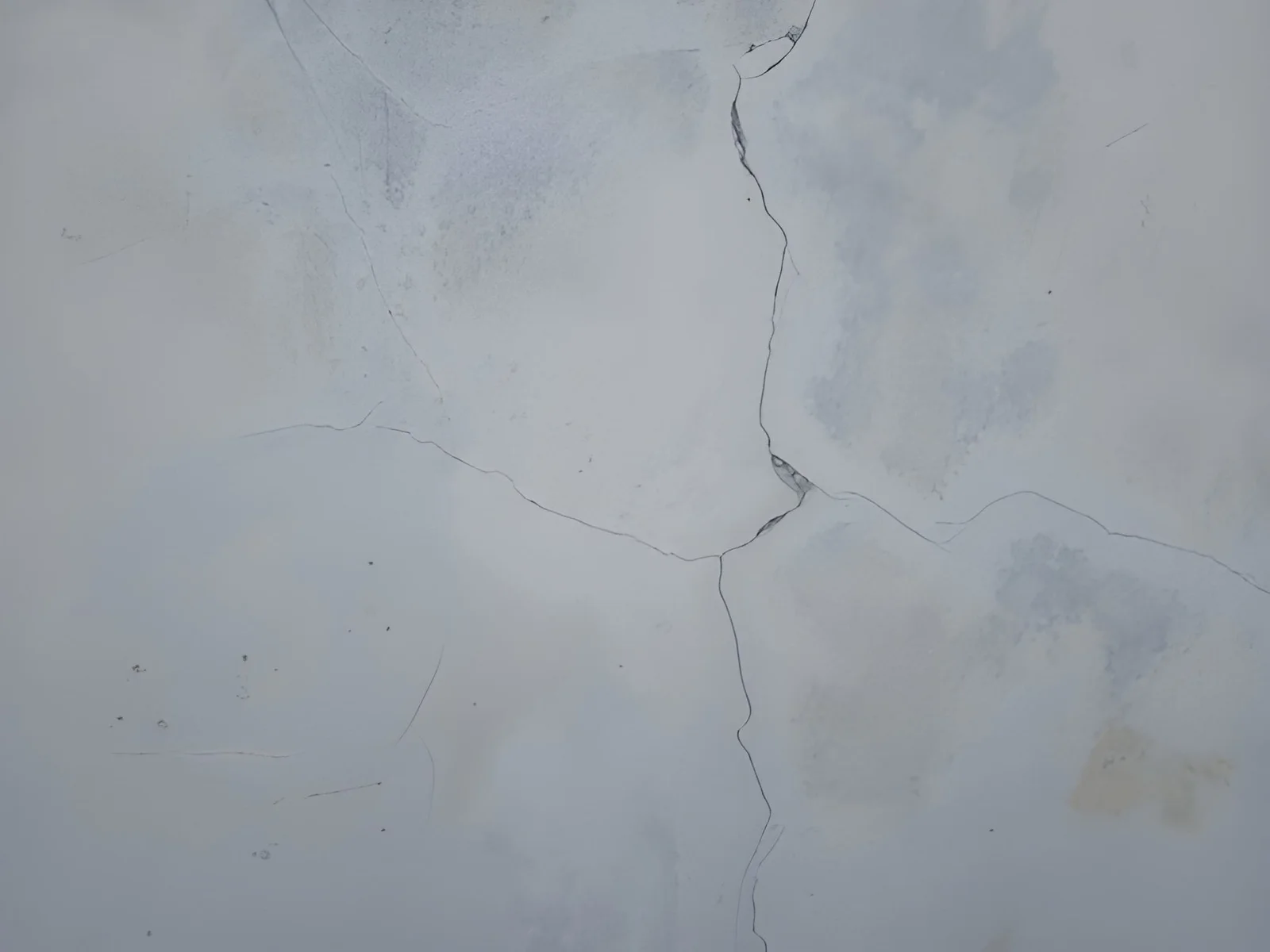
A line across the ceiling can mean two completely different things. It might be a thin seam where the drywall tape let go, or the first visible sign that water is soaking the room above or that part of the house is moving. If you are asking what to do when you discover cracks in your ceiling, the right first move is not to patch. It is to read the crack: its width, its shape, its location, and whether it is changing.
The reassuring part is that most cracks are minor. One home repair guide says virtually all homes will develop cosmetic cracks over time, but cracks wider than 1/8 inch can signal structural issues.
I have seen owners fill the same crack three times, and every time it reopened because a slow leak above it kept the drywall wet. The patch was never the problem.
This article is general information, not a structural inspection. If a ceiling is sagging, keep people out from under it and call a professional.
It covers a quick answer, a crack-reading table, a monitoring method, a repair path, asbestos safety, mistakes to avoid, and a short FAQ.
What should you do when you discover cracks in your ceiling?
First check for sagging, stains, or wetness. Then measure the crack, mark its ends with a pencil and date, and watch it for a few weeks. Repair stable hairline cracks with joint compound. Call a professional for cracks wider than 1/8 inch, growing cracks, sagging, water damage, or suspected asbestos.
What does the crack look like?
| What you see | Likely cause | Action |
|---|---|---|
| Thin spider-web lines | Joint compound applied too thickly, causing shrinkage cracks as it dried | Cosmetic repair |
| Crack at the wall-ceiling corner that opens in winter | Truss uplift, generally considered cosmetic, though an engineer should confirm unusual cases | Monitor |
| Crack along a seam, loose tape | Scrape off the loose tape and re-tape the joint | DIY repair |
| Stain with cracks or bubbles | A leak from a roof, bathroom, or HVAC unit can soak the drywall | Fix the leak first |
| Sagging or bulging | Needs prompt professional evaluation; keep people out from under it | Call a pro |
| Cracks in several rooms | Cracks of any size in more than one room are a reason to contact a professional | Get an inspection |
How wide is too wide?
Sources disagree on the exact thresholds, so treat these as ranges.
| Source view | Minor | Concern |
|---|---|---|
| One guide | Less than 1/16 inch usually is not a concern | Wider than 1/8 inch, other foundation signs, or any crack with sagging |
| Another guide | Less than 1/16 inch: monitor, and repair only if it widens | 1/16 to 1/4 inch: contact a structural engineer; over 1/4 inch: seek immediate help |
| Repair guide | Cracks wider than 1/8 inch may signal structural issues | Consult a reputable builder |
When sources split, use the cautious number.
How do you monitor and repair?
| Step | Action |
|---|---|
| 1 | Photograph the crack with a ruler beside it |
| 2 | Mark the crack with a pencil to monitor movement or growth |
| 3 | Correct any moisture source before you patch and paint |
| 4 | For small, stable cracks, press in joint compound and let it dry |
| 5 | Use drywall tape for larger cracks, and dry completely before sanding |
| 6 | Apply a stain-blocking primer before painting |
| 7 | Recheck after a season |
A crack that stays the same through a full year of seasons is far less concerning than one that keeps growing
What about asbestos and lead?
| Fact | Detail |
|---|---|
| Popcorn ceilings | Sources vary: before 1978, before 1980, or before 1985 may contain asbestos |
| Do not disturb | Sanding or scraping can be hazardous, so have the material tested first |
| Lead paint | Homes built before 1978 may have lead-based paint |
| If positive | It is usually better to hire an asbestos-remediation expert |
What mistakes should you avoid?
- Patching before finding the leak. The repair will fail.
- Sanding an old textured ceiling. Test it first.
- Ignoring sagging. Leave the room and call a pro.
- Using one crack to judge the house. Look for patterns.
Frequently asked questions
Are ceiling cracks normal?
Often, but width, growth, and sagging decide how serious they are.
Can you paint over a crack?
Only after repair and priming, and only if the cause is fixed.
Who should you call?
A builder or structural engineer for movement, a roofer or plumber for leaks.
Bottom line
Read the crack, check for water and sagging, monitor it, and repair only stable cracks. Test old textured ceilings for asbestos before sanding, and call a professional for wide, growing, or sagging cracks.
for more information visit https://tipsdrhomey.org/